Somebody in every office ends up owning the events diary. Sometimes it's the EA or PA, sometimes the office manager, sometimes whoever on the marketing team said yes to organising the summer party three years ago and never quite escaped. The job title varies; the situation doesn't. You book the venue, you carry the risk, and if the evening goes well the credit tends to drift towards whoever gave the speech.
We've been on the other side of that arrangement since 2005. Steam Wine Bar is a basement venue on St George's Lane, one minute from Bank and Monument, and a large share of our bookings come from exactly the people described above: the organisers inside the insurance and broking firms around EC3 who have to get it right, quarter after quarter.
This guide collects what those bookers ask us, what the sharpest ones check before they confirm anything, and what we'd want to know if we were sitting on your side of the email. Four sections: how to choose between a characterful venue and a hotel function room, the questions worth asking before you book anywhere, the event formats that actually work, and when to book if you want the dates everyone else wants.
There's no sales pitch until the end, and even then it's a short one.
1.A room with character, or a hotel function room
Most corporate venue searches end up at the same fork in the road. Option one is the hotel function room or serviced events suite: large, predictable, air-conditioned, with a laminated AV menu and a coffee station in the corridor. Option two is a smaller independent venue with its own character and its own way of doing things.
The function room is the safe-looking choice, and for some events it's genuinely the right one. If you're running a 400-person conference with breakout sessions and a registration desk, book the hotel. Nobody sensible would tell you otherwise.
Client entertaining is a different job. The purpose of a client lunch or an evening reception isn't to seat people efficiently. It's to start conversations that wouldn't happen across a desk, and to leave your guests with a memory attached to your firm's name. That's where the anonymous room quietly works against you. Your guests have sat in a hundred rooms like it. They know the drill, they behave accordingly, and by Thursday they couldn't tell you which hotel it was.
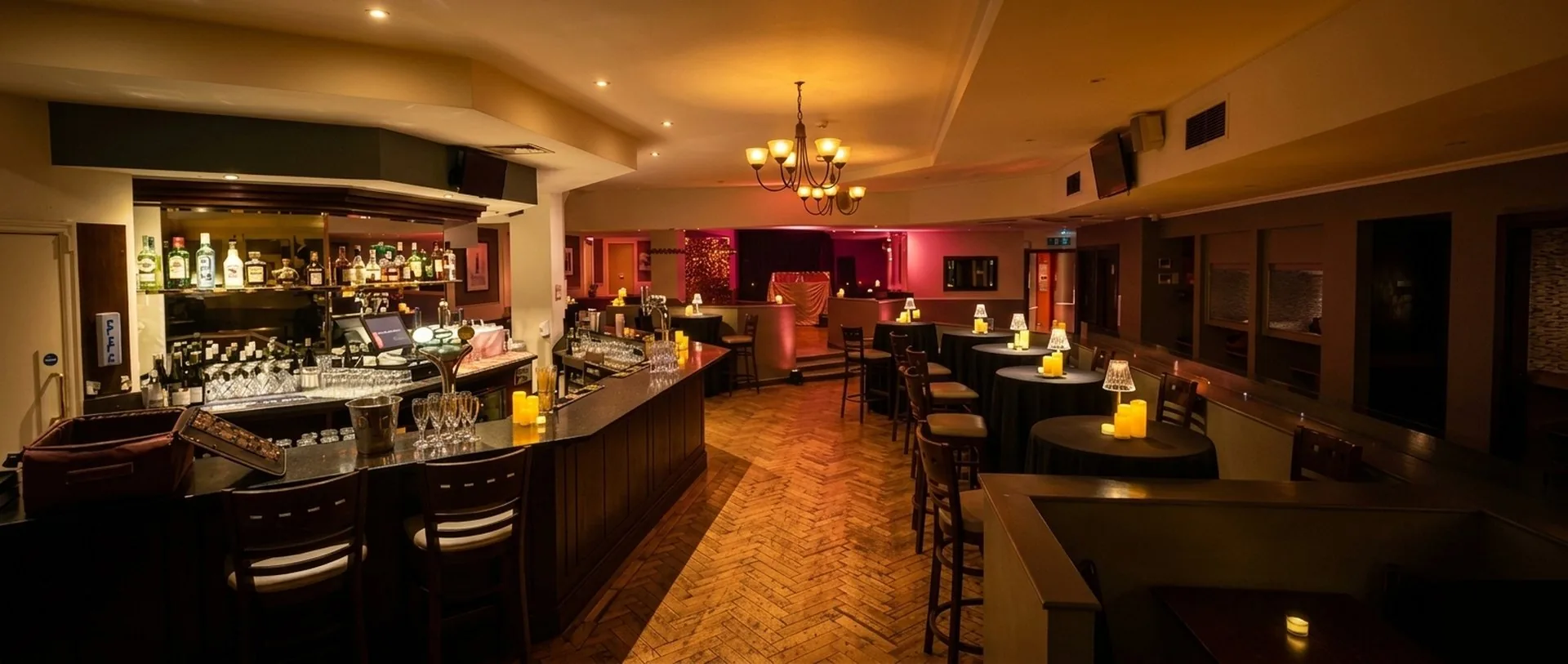
A venue with character does the opposite. A basement room with herringbone floors, candlelight and a proper bar gives people something to notice and something to talk about before the first glass is poured. The conversation starts itself, which is precisely what you booked the event for.
Scale matters here too, and not in the direction most venue marketing suggests. A 90-seat room means your event is the event. There's no ballroom next door working through its own awards night, no shared lobby, no signage directing your guests past someone else's conference. Everyone in the room is yours, and the whole team working that day is working for you.
Two honest caveats, because a smaller venue asks a little more of the booker. First, check the numbers properly: a room that seats 90 will not seat 120, whatever anyone hopes. At Steam the figures are 90 seated, 126 for structured events with theatre-style seating, and 150 standing for whole-venue hire. Second, character sometimes comes with quirks. Steam is a basement reached by stairs, with no step-free access, and that's worth knowing on day one rather than the day before.
A simple test we'd suggest: picture your most important guest walking in. If the moment you're imagining looks like a corridor and a branded pull-up banner, keep looking.
2.The questions to ask before you book anywhere
The difference between a booker who has done this before and one who hasn't is rarely taste. It's the list of questions they send before confirming. Here's the list we'd use, and the answers any decent venue should give you without flinching.
What's the capacity in the layout I actually want?
A venue quoting a single number is a venue about to disappoint someone. A seated dinner, a theatre-style presentation and a standing reception are three different capacities in the same room. Ask for the figure for your format. At Steam: up to 90 seated for lunches and dinners, up to 126 for structured events such as quizzes and presentations, up to 150 standing for exclusive whole-venue hire.
What AV is there, and what does my speaker need?
If your event involves a presentation, a panel or a guest speaker, send the technical requirements with your enquiry and get a plain answer back before you book. A good venue tells you exactly what works in its space rather than promising everything and improvising on the day. Steam has a microphone and PA used at our own speaker lunches every season, plus screens in the main room for slides; anything beyond that, we confirm in writing first.
How are dietary requirements handled?
The practical answer you want is "per guest, with advance notice". Vegetarian, vegan, gluten-free and allergies should all be routine, not a drama. It's also worth asking where the food actually comes from. At Steam everything is from our own kitchen, shaped to the occasion; there's no external catering to coordinate.
What are the timings, exactly?
Not just the guest arrival time. When can you or your suppliers get in to set up, when does food service start and finish, and when does the event have to end? At Steam, lunch events run midday to mid-afternoon Monday to Friday, evening events run Tuesday to Friday until 11pm, and morning formats such as breakfast briefings are arranged case by case.
What's the access situation?
Ask directly, and be wary of vague answers. Steam is a basement venue reached by a flight of stairs, and there is no step-free access. We'd rather tell you that in the first email than have a guest find out at the door. If any of your guests have specific requirements, tell the venue early and a straight answer should come back about what can and can't be done.
How do guests get there, and where do the taxis go?
An event your guests can't find starts badly, and in the City the answer is nearly always the Tube. Steam is one minute's walk from both Bank and Monument, three minutes from Fenchurch Street, and a short walk from Liverpool Street. Taxis drop on Eastcheap or Gracechurch Street, and the nearest car park is the NCP on Lower Thames Street, though for a City event we'd always point guests at public transport. Whatever the venue, put the walking directions in the invitation; it's a small thing that saves ten phone calls on the day.
Who will I actually be dealing with?
A named coordinator who stays with you from first email to event day is worth a great deal more than a bookings inbox. At Steam that person is Tianna, our Events Coordinator, and enquiries get a reply within one working day.
Can I see the room?
Always ask. Half the questions on this list answer themselves the moment you stand in the space.
On price: any venue doing this properly will quote per event, because a Tuesday lunch for 30 and a Friday takeover for 150 are not the same job. Enquire for rates, and expect the quote to be itemised and quick.
3.The formats that work
After two decades of City events, the bookings settle into five formats. All five run at Steam, and the same shapes work at any venue worth booking. The full detail, including our ten most-asked booking questions, is on the corporate events page.
Networking lunches
The City classic, and still the format that does the most work per hour. A sit-down lunch from midday to mid-afternoon, Monday to Friday, with full menu and wine service. Add an MC or a guest speaker if you want structure, or let a good table and a good list do the job on their own.
Networking drinks
After-work drinks for a team or a client group, from ten people to the whole floor. The format suits standing receptions, informal mingling, or a structured welcome before a dinner. The bar matters more than usual here, which is rather our home ground.
Private dining
A dedicated space for up to 90 guests, seated. This is the format for speeches, award moments and anything that should feel genuinely private rather than partitioned off the corner of a busy restaurant.
Presentations and guest speakers
Steam has hosted speaker lunches for many years, and the room has a natural focus: guests arrive, settle in with a drink, and pay attention. The same structured setup, with theatre-style seating for up to 126, also works for team events; a company quiz night is a reliably popular way to use it.
Whole-venue hire
The entire venue, exclusively yours, for up to 150 guests. Company celebrations, large client evenings, annual parties, Christmas. Fridays and weekends are available by private arrangement, which is worth knowing when the mid-week diary is full.
Choosing between them comes down to one question: what do you want people saying on the way out? "Lovely lunch" points to private dining. "I met three useful people" points to networking drinks. "Did you hear what the speaker said about the Ashes" points to a speaker lunch. "That was the best Christmas do we've had" points to the whole venue.
4.Timing: when the diary actually gets decided
Here's the pattern we see every single year. October to December is decided in September.
Everyone returns from summer in the same week, looks at the same diary, and starts booking the same six weeks of autumn. Mid-week lunch dates go first, because the lunch is the City's default format and Tuesday to Thursday are the City's default days. By mid-October, the venues around EC3 are quoting you their second-choice dates and everyone is being terribly polite about it.
Christmas compounds the problem. The most-wanted December slots are the Wednesdays and Thursdays in the first three weeks of the month, and there are only six of them. They go to whoever moved earliest, which in practice means the bookers who enquired in September and confirmed in early October. That's the entire early-bird logic: not a discount, just first choice of a small set of dates that cannot be manufactured later.
The practical rules, from the venue side of the ledger:
- If the event matters, enquire two months ahead. For December, make it three.
- Book the date before the details. A venue can hold a date while the guest list settles; it cannot invent a second Thursday.
- If your preferred date has gone, ask about Fridays or a whole-venue arrangement before you compromise on the room itself.
- January is underrated. The diary is open, guests are fresh, and a New Year planning lunch lands well while everyone's good intentions are still intact.
None of this is a scarcity pitch. It's the arithmetic of a district where several thousand firms share a handful of good rooms and one short season.
The short sales pitch we promised
Steam Wine Bar has been hosting the City since 2005: an independent, family-run basement venue at 1 St George's Lane, EC3R 8DJ, one minute's walk from Bank and Monument. Teams from firms including Marsh, Aon, Lockton, WTW and Sompo International have eaten, argued and celebrated in this room. Up to 90 seated, 126 for structured events, 150 for whole-venue hire, all of it with our kitchen, our wine list and one named coordinator from first email to event day.
If you're planning something between now and Christmas, the diary advice above applies to us too, so it's worth getting in touch sooner rather than later.
Talk to Tianna about your event
Email events@steamwinebar.com, call 020 7929 0819, or use the short enquiry form. You'll get a reply within one working day, and a straight answer on anything this guide didn't cover. Enquire for rates.
Formats, capacities and the full booking FAQ: our corporate events page.